
Fatty Liver Disease in Singapore: Understanding MASLD, Its Causes, Symptoms and Treatment
Fatty liver disease is estimated to affect up to 40% of adults in Singapore.1 As it often causes no noticeable symptoms in its early stages, you may even have it without realising.
Read on to understand how the condition develops and progresses, how it is diagnosed and treated in Singapore, and what you can do to protect your liver health.
What Is Fatty Liver Disease?
Fatty liver disease occurs when too much fat builds up in the liver. While a small amount of fat is normal, excess fat can sometimes lead to inflammation and scarring over time, which may affect how well your liver works.
Today, doctors use steatotic liver disease (SLD) as the general term for conditions involving excess fat in the liver. The condition is then classified based on what is contributing to the fat build-up.
Previously, fatty liver that was not caused by significant alcohol consumption was commonly known as non-alcoholic fatty liver disease (NAFLD). This was distinguished from alcohol-associated liver disease (ALD), where alcohol is the main contributor to liver damage.
NAFLD is now known as metabolic dysfunction-associated steatotic liver disease (MASLD) when excess liver fat occurs together with at least one cardiometabolic risk factor, such as obesity, high blood pressure or diabetes. This newer term reflects the important role that metabolic health can play in the condition.
There can also be overlap between metabolic factors and alcohol consumption. MetALD describes people with MASLD whose alcohol intake falls within a defined range where alcohol also contributes to their liver disease.
What Is Metabolic Dysfunction-Associated Steatotic Liver Disease (MASLD)?
Metabolic dysfunction-associated steatotic liver disease (MASLD) occurs when excess liver fat is present alongside at least one cardiometabolic risk factor. These may include:
- Being overweight or having excess fat around the waist
- Insulin resistance
- Type 2 diabetes
- High blood pressure
- Abnormal cholesterol or triglyceride levels
MASLD affects approximately 3 in 10 adults worldwide.2 It is considerably more common among people who are overweight or have obesity, as well as those with type 2 diabetes.3, 4 However, MASLD can also affect people who are not overweight. In Asian populations, metabolic risk may develop at a lower body mass index (BMI). An assessment may therefore consider waist circumference and other health indicators rather than weight alone.
Conditions such as Polyendocrine Metabolic Ovarian Syndrome (PMOS), obstructive sleep apnoea and chronic kidney disease may also occur alongside MASLD. For this reason, doctors may assess the condition as part of your overall metabolic and cardiovascular health.
Why Is NAFLD Now Called MASLD?
MASLD is the newer name for non-alcoholic fatty liver disease (NAFLD). While the previous name defined the condition mainly by the absence of excessive alcohol consumption, MASLD focuses on the metabolic factors associated with liver fat.
The change in terminology does not describe an entirely different disease. Instead, it reflects a greater understanding of fatty liver as part of a person’s broader metabolic health.
Grades of MASLD
MASLD may be described as mild, moderate or severe depending on how much fat is present. Your report may also use the terms Grade 1, Grade 2 and Grade 3. Under a commonly used biopsy-based grading system, the grades are:5
| Grade | Severity | Approximate proportion of liver cells containing fat |
|---|---|---|
Grade 1 | Mild | 5% to 33% |
Grade 2 | Moderate | 34% to 66% |
Grade 3 | Severe | 67% or more |
A higher grade means that more fat is present, but it does not necessarily mean that you have advanced liver damage. The amount of fat and the amount of liver scarring are assessed separately. Your doctor will interpret the grade alongside your blood test results and other findings.
Progression of MASLD
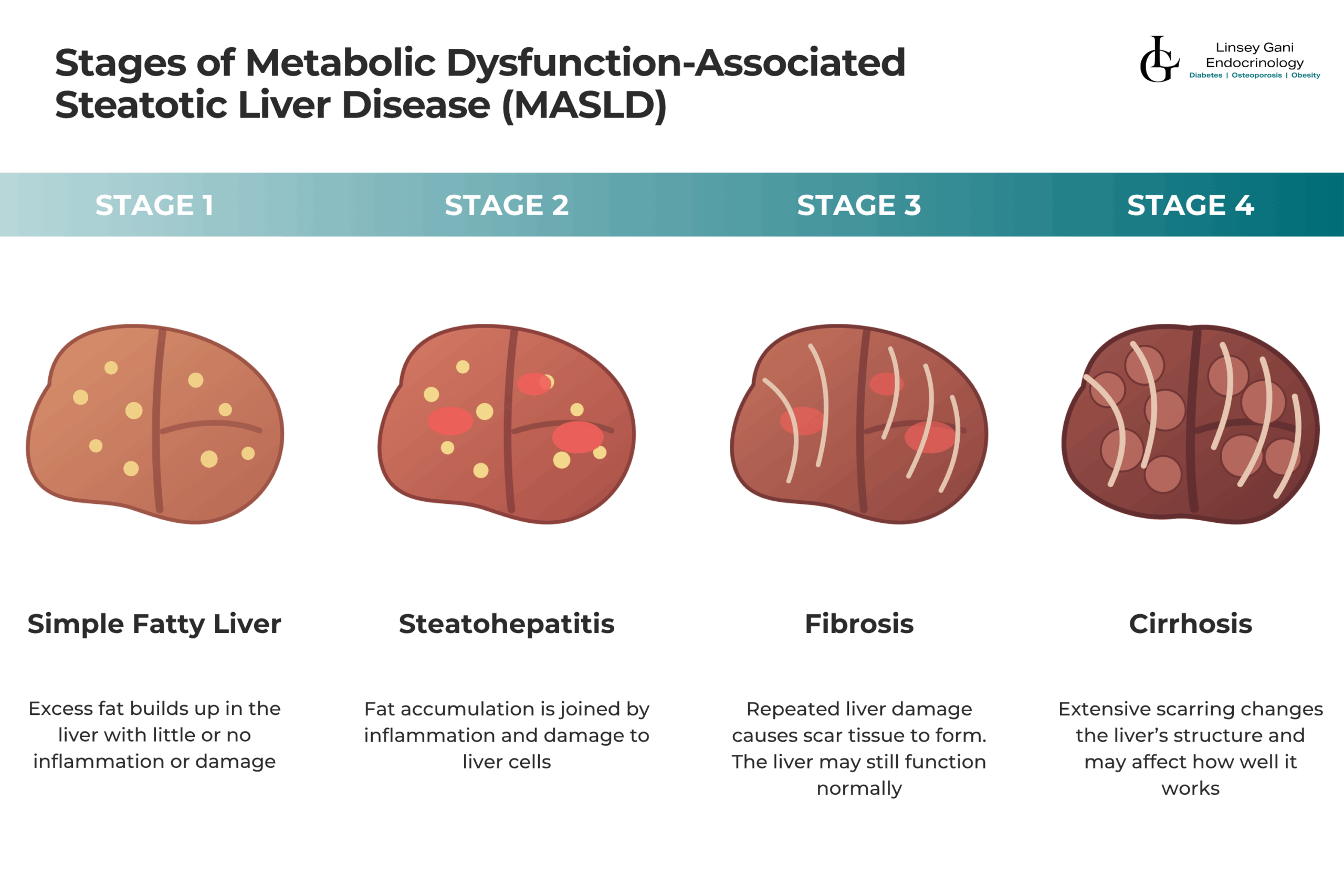
MASLD does not always worsen, and early liver changes may improve with appropriate management. However, ongoing inflammation and liver damage may cause the condition to progress as follows:
- MASLD: Excess fat accumulates in the liver, usually with little or no inflammation.
- Metabolic dysfunction-associated steatohepatitis (MASH): Liver fat is accompanied by inflammation and damage to liver cells.
- Fibrosis: Repeated liver damage causes scar tissue to form, although the liver may still function normally.
- Cirrhosis: Extensive scarring changes the structure of the liver and may prevent it from functioning properly.
Cirrhosis also increases the risk of hepatocellular carcinoma (HCC), a type of primary liver cancer. However, not everyone with MASLD progresses to cirrhosis or HCC.
What Are the Symptoms of Fatty Liver/MASLD?
Fatty liver symptoms are often absent in the early stages of MASLD. You may only discover the condition through a blood test or scan performed for another reason. When symptoms do occur, they may include:
- Persistent tiredness or weakness
- A dull ache or discomfort in the upper-right abdomen
- Loss of appetite
- Unexplained weight loss
If MASLD progresses to advanced liver scarring, you may develop yellowing of the skin or eyes, swelling in the abdomen or legs, or a tendency to bruise more easily.
As other conditions may also cause these symptoms, speak to a doctor if they persist or worsen.
What Causes Fatty Liver/MASLD?
MASLD develops when the liver takes in or produces more fat than it can process and remove. Insulin resistance is a key contributor because it increases the flow of fatty acids to the liver and may encourage the liver to produce more fat.
Other factors that may increase your risk of MASLD include:
- Being overweight or having excess fat around the waist
- Insulin resistance or type 2 diabetes
- High cholesterol or triglyceride levels
- High blood pressure
- A diet high in sugar and refined carbohydrates
- Insufficient physical activity
- Certain genes or a family history of fatty liver
It is important to note that fatty liver can also affect people who are not overweight and do not have obvious risk factors. Alcohol is not the primary cause of MASLD, but it can worsen liver damage and affect how the condition is classified.
How Is Fatty Liver/MASLD Diagnosed in Singapore?
Diagnosing MASLD involves confirming that liver fat is present, identifying relevant metabolic risk factors and checking for other possible causes of liver disease. The assessment may include:
- Medical history: Your doctor may ask about your family history, alcohol intake, diet, activity levels, medications and existing health conditions.
- Physical examination: Your doctor may check your blood pressure, height and weight, waist measurement and BMI. They may also check your abdomen for an enlarged liver and look for signs that could suggest more advanced chronic liver disease. Most people with early MASLD, however, have no obvious physical signs of liver disease.
- Blood tests: These may check your liver enzyme levels, fasting blood glucose, HbA1c and lipid levels. However, normal liver enzyme levels do not necessarily rule out MASLD.
- Tests for other liver conditions: Depending on your medical history and results, your doctor may screen for other causes of liver damage, including hepatitis B and hepatitis C.
- Imaging tests: If fatty liver is suspected and no recent liver imaging is available, your doctor may recommend an abdominal ultrasound. This can detect moderate or greater amounts of liver fat, although it may miss smaller amounts and be less accurate in people with significant obesity. A FibroScan may also be used to estimate liver fat and measure liver stiffness, which can indicate scarring.
- Liver biopsy: A biopsy is not usually required. However, your doctor may recommend one if the diagnosis remains unclear or a closer assessment of inflammation and scarring is needed.
If you have abnormal liver test results or are concerned about your risk of fatty liver, book an appointment for a medical assessment.
What Are the Treatment Options for Fatty Liver/MASLD in Singapore?
If you are wondering how to reduce fatty liver, treatment generally focuses on sustainable lifestyle changes and managing related metabolic conditions. The approach your doctor recommends will depend on whether liver inflammation or scarring is present, as well as your overall health.
At LG Endocrinology, we assess the metabolic factors contributing to MASLD and recommend a management plan based on your health needs. Book an appointment to discuss your treatment options.
Weight Loss
If you are overweight, gradual and sustainable weight loss may improve fatty liver. The potential benefits generally increase as more weight is lost:6
| Weight loss achieved | Potential benefit |
|---|---|
At least 5% of body weight | May reduce fat accumulation in the liver |
5 to 7% | May improve liver enzymes and metabolic health |
7% to 10% | May improve liver inflammation |
10% or more | May help improve liver fibrosis in some people |
These figures are general treatment targets rather than fixed requirements. Your doctor can recommend an appropriate goal based on your starting weight, metabolic health and other medical conditions.
Healthy Eating
There is no single diet for fatty liver disease. Instead, aim for an eating pattern that supports healthy weight management and improves blood glucose, cholesterol and triglyceride levels.
As a practical guide, you can follow My Healthy Plate:
- Fill half your plate with vegetables and fruit.
- Fill one quarter with whole grains.
- Fill one quarter with lean sources of protein.
- Choose water instead of sugar-sweetened drinks.
Limit highly processed foods, refined carbohydrates and foods high in saturated fat. Choose an approach you can maintain over the long term rather than following a restrictive short-term diet.
Exercise and Physical Activity
Regular physical activity may reduce liver fat and improve insulin sensitivity even without substantial weight loss. Adults should generally aim for 150 to 300 minutes of moderate-intensity aerobic activity each week, together with muscle-strengthening exercise on at least two days.
Brisk walking, cycling, swimming and resistance training are possible options. If you have been inactive, begin with shorter periods of activity and build up gradually. Speak to your doctor before making major changes to your exercise routine if you have cardiovascular disease, severe obesity or another condition that may affect how safely you can exercise.
Limit Alcohol Intake
Alcohol can place additional strain on the liver. Depending on the extent of liver damage and your usual alcohol intake, your doctor may recommend reducing or avoiding it completely.
Medication
Medicines may be prescribed to manage related conditions such as type 2 diabetes, high cholesterol, high blood pressure or obesity. Keeping these conditions under control may also support your liver health.
If you have liver inflammation or significant scarring, additional treatment may be considered based on your test results, other health conditions and the availability of suitable medication in Singapore.
Metabolic or Bariatric Surgery
Metabolic or bariatric surgery may be considered for selected people with significant obesity who have been unable to achieve sustained weight loss through lifestyle changes and appropriate medication. The resulting weight loss may improve blood glucose control, insulin resistance, liver fat and MASH. Fibrosis may also improve in some people.
As this is a major procedure, careful multidisciplinary assessment is required. People with advanced liver scarring should also be assessed by an appropriate liver specialist.
How Can Fatty Liver/MASLD Be Prevented?
Not every case of MASLD can be prevented, particularly when genetics are involved. However, you may be able to lower your risk by:
- Maintaining a healthy weight through balanced meals and regular physical activity
- Monitoring and managing your blood glucose, blood pressure, cholesterol and triglyceride levels
- Limiting sugar-sweetened drinks, refined carbohydrates and highly processed foods
- Avoiding excessive alcohol consumption
Metabolic risk factors may be present without obvious symptoms. If you have obesity, type 2 diabetes or abnormal cholesterol levels, a health screening may help identify these risks. Your doctor can then advise whether a liver assessment is appropriate.
FAQs About MASLD and Fatty Liver Disease
Is MASLD the same as fatty liver disease and NAFLD?
MASLD is one type of fatty liver disease and is the newer name for NAFLD. The term MASLD emphasises the metabolic factors associated with liver fat.
Why does my doctor ask about alcohol intake when assessing MASLD?
Metabolic risk factors and alcohol can both contribute to liver fat and damage. Asking about your alcohol intake helps your doctor determine whether the condition is primarily MASLD, alcohol-associated liver disease or MetALD, where both factors contribute. It also helps guide advice on whether you should reduce or avoid alcohol.
Is MASLD dangerous?
MASLD is often mild, but it can become serious if inflammation and scarring develop. Some people progress to MASH, cirrhosis, liver failure or liver cancer. It is also associated with a higher risk of cardiovascular disease and certain cancers outside the liver, including colorectal cancer.7
Can you have MASLD without being overweight?
Yes. Although MASLD is strongly associated with overweight and obesity, it can also affect people whose BMI is within the normal range. Some adults may still have excess visceral fat, insulin resistance, abnormal lipid levels, diabetes or genetic susceptibility. Body weight alone cannot confirm or rule out MASLD.
Can MASLD be reversed?
In many people, particularly in the earlier stages, MASLD can improve substantially through weight loss, regular exercise, healthier eating and effective management of related metabolic conditions. Liver inflammation and some fibrosis may also improve, although cirrhosis is generally not fully reversible.
How much weight should I lose if I have MASLD?
If you are overweight, losing at least 5% of your body weight may reduce liver fat. A loss of 7% to 10% may improve inflammation, while losing 10% or more may help improve fibrosis in some people. Your target should be individualised according to your weight, metabolic health and other medical conditions.³
When should I see a doctor for MASLD?
See a doctor if a test suggests MASLD, you have relevant risk factors, or you develop persistent symptoms. Seek prompt medical attention for yellowing of the skin or eyes (jaundice), abdominal swelling or confusion. If you are concerned about your liver health, book an appointment with us and let us help you understand the next steps.
How do doctors know whether MASLD has caused liver scarring?
Doctors may use blood-test-based fibrosis scores and imaging tests that estimate liver stiffness. Further investigations or specialist assessment may be recommended if there is concern about significant fibrosis.
Do I need medication for MASLD?
Not everyone requires medication specifically for MASLD. Treatment usually focuses on managing weight and related conditions such as diabetes, high blood pressure and abnormal cholesterol levels. Additional treatment may be considered if liver inflammation or significant scarring is present.
Where can I find a MASLD or fatty liver specialist in Singapore?
An endocrinologist can assess fatty liver linked to obesity, insulin resistance, diabetes or abnormal cholesterol levels. More advanced liver disease may also require care from a gastroenterologist or hepatologist. At LG Endocrinology, Dr Linsey Gani can assess the metabolic factors contributing to fatty liver and recommend suitable tests and treatment. Contact us to discuss your concerns today.
Disclaimer
This information is provided for general education. It does not replace personalised medical advice. Please consult your doctor for guidance on the medications that may be appropriate for you.
1Retrieved from HealthXchange
2Retrieved from PubMed
3Retrieved from PubMed
4Retrieved from PubMed
5Retrieved from PubMed
6Retrieved from Journal of Hepatology
7Retrieved from Gut

Dr Linsey Gani is an endocrinologist experienced in conditions related to hormonal imbalances, including those affecting fertility, menstrual health, and reproductive function. Dr Gani completed her residency in Melbourne, Australia. She is a fellow of the Royal Australian College of physician and the Academy of Medicine, Singapore.
Related Articles

HbA1c Test in Singapore: What Is It, What Is a Normal Range and How to Interpret Results
HbA1c Test in Singapore: What Is It, What Is a Normal Range and How to Interpret Results HbA1c is a
Blood Sugar Level Range in Singapore: How to Check, What Is Normal and How to Interpret Results
Blood Sugar Level Range in Singapore: How to Check, What Is Normal and How to Interpret Results Your blood sugar

Polyendocrine Metabolic Ovarian Syndrome (PMOS): What Is It and Is It the Same As PCOS?
Polyendocrine Metabolic Ovarian Syndrome (PMOS): What Is It and Is It the Same As PCOS? If you have heard of