HbA1c Normal Range

HbA1c Test in Singapore: What Is It, What Is a Normal Range and How to Interpret Results

HbA1c is a blood marker that gives an overview of your average blood sugar levels over the past two to three months. It measures how much glucose has attached to haemoglobin, a protein found in your red blood cells.

This makes the HbA1c test useful for checking your risk of prediabetes or diabetes, as well as monitoring long-term control if you have already been diagnosed. In Singapore, diabetes remains a significant long-term health concern, with an estimated 699,100 adults aged 20 to 79 living with diabetes in 2024.1

For some people, high blood sugar may not cause obvious symptoms in the early stages. Regular screening can be helpful if you have a higher risk of diabetes, such as a family history of diabetes, being above the age of 40, or a history of gestational diabetes.

In this article, we explain what the HbA1c test is, what is generally considered a normal HbA1c range, how to interpret your results, and what you can do to manage your HbA1c levels.

What Is the HbA1c Test?

The HbA1c test is a blood test that provides an estimate of your average blood glucose levels over the past 2 to 3 months. It measures how much glucose has attached to haemoglobin, a protein found in red blood cells. The higher your blood glucose levels are over time, the more glucose becomes attached to haemoglobin.

Unlike a finger-prick blood glucose test, which reflects your glucose level at that specific moment, the HbA1c test gives a broader picture of your glucose exposure over several weeks. This means that your HbA1c result is less affected by short-term changes, such as what you ate that day, temporary stress, or a single high or low reading.

For this reason, the HbA1c test is commonly used to screen for prediabetes and diabetes, monitor long-term diabetes control, and guide treatment decisions where needed.

HbA1c results are often interpreted together with other blood glucose tests, such as fasting plasma glucose (FPG) or an oral glucose tolerance test (OGTT). In Singapore, your doctor may use the following ranges as a general guide when screening for prediabetes or diabetes:2

Type of testNormal rangePrediabetes rangeDiabetes range

Fasting Plasma Glucose (FPG)

Less than 6.1 mmol/L

6.1–6.9 mmol/L

7.0 mmol/L or higher

OGTT, 2-hour reading

Less than 7.8 mmol/L

7.8–11.0 mmol/L

11.1 mmol/L or higher

HbA1c

6.0% and below

6.1–6.9%

7.0% or higher

Some international guidelines use slightly different HbA1c cut-offs. For example, the American Diabetes Association considers an HbA1c below 5.7% normal, 5.7% to 6.4% as prediabetes, and 6.5% or higher as diabetes. This is why your HbA1c result should be interpreted by a doctor, especially if your result is close to a cut-off or does not match your symptoms. 

If you are unsure whether your HbA1c reading is within a suitable range, contact us to review your results and advise whether further diabetes evaluation or health screening may be needed.

Your ideal HbA1c target is not based on age alone. Your doctor may adjust your target depending on your overall health, treatment plan and risk of low glucose episodes.

FactorWhy it matters

Overall health

A lower target may be suitable if you are generally healthy, while a less strict target may be safer if you have more complex health needs.

Risk of low glucose episodes

If you have frequent or severe hypoglycaemia (low blood sugar), your doctor may set a less strict target.

Diabetes duration

A person who has lived with diabetes for many years may need a more individualised target.

Treatment burden

If a lower HbA1c target requires complex treatment or causes side effects, your doctor may adjust the goal.

Pregnancy or pregnancy planning

A lower HbA1c target may be recommended if it can be achieved safely.

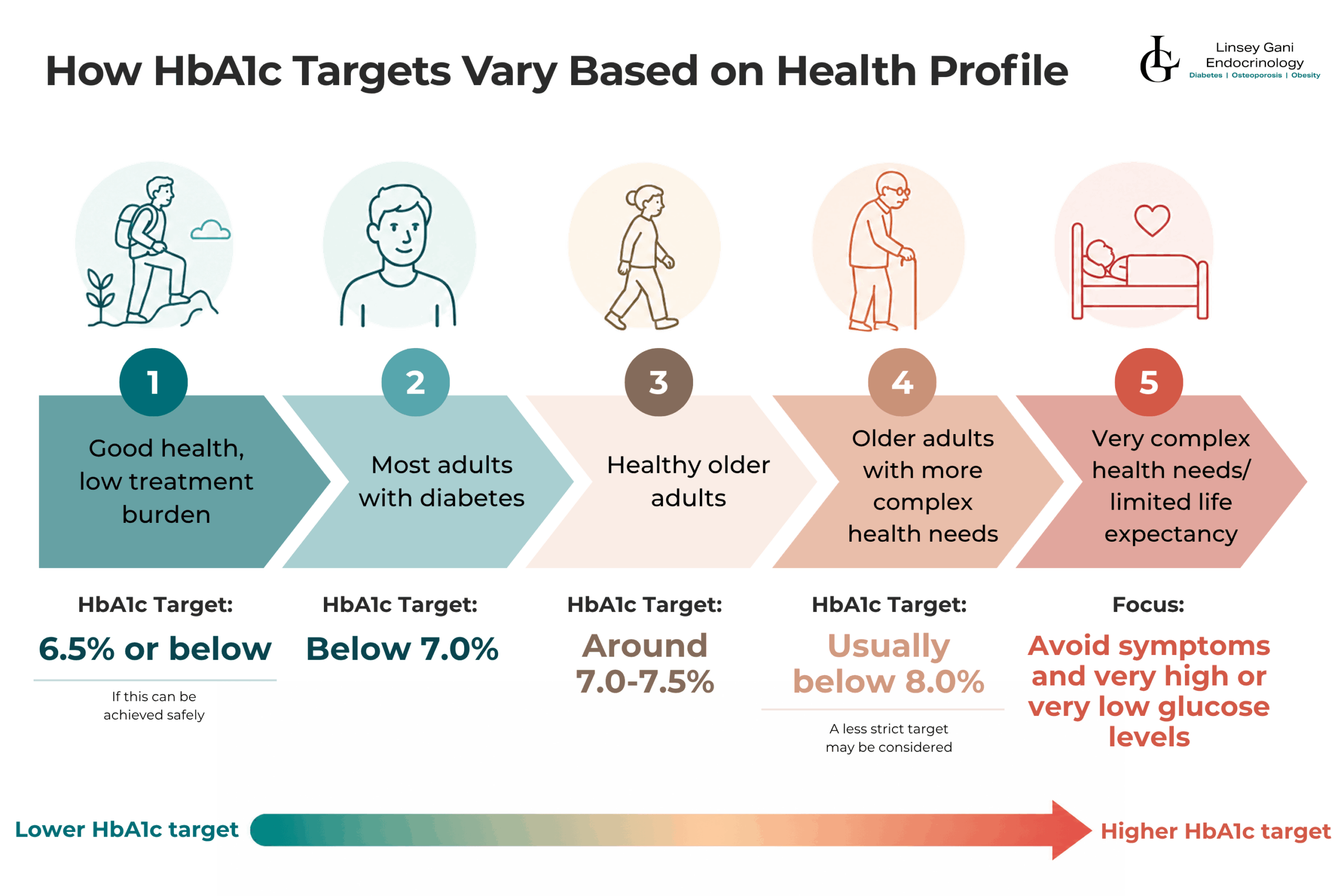
For individuals with diabetes, your HbA1c target may differ from the diagnostic ranges above. Your doctor will usually consider your age, overall health, diabetes history, risk of low blood glucose episodes, and the type of treatment you are on. The table below summarises general HbA1c targets for different health profiles:3

Health profileTypical HbA1c target with diabetes

Adults with good health and low treatment burden

6.5% or below, depending on overall health and risk of low blood sugar

Most adults with diabetes

Below 7.0%, depending on overall health and risk of low blood sugar

Healthy older adults

7.0–7.5%, depending on overall health and risk of low blood sugar

Older adults with more complex health needs

Usually below 8.0%, although a less strict target may be considered

Older adults with very complex health needs or limited life expectancy

The focus may shift towards avoiding symptoms and preventing very high or very low glucose levels, rather than aiming for a strict HbA1c number

To visualise this more simply, HbA1c targets can be understood as a spectrum. People with good health and low treatment burden may be suitable for a lower target, while those with more complex health needs may need a less strict target to reduce the risk of low glucose episodes or treatment-related harm.

If you have diabetes and are planning pregnancy, or are already pregnant, your doctor may recommend a lower HbA1c target than usual. Good glucose control before and during pregnancy can help reduce the risk of pregnancy-related complications.

For many women, an HbA1c below 6.0% may be recommended if it can be achieved safely without frequent or severe low glucose episodes.4 If this is not suitable, your doctor may set a less strict target based on your individual health needs.

However, HbA1c does not show day-to-day glucose changes. During pregnancy, your doctor may also recommend home glucose monitoring or continuous glucose monitoring (CGM) to check whether your glucose levels stay within the recommended range.

Your doctor or endocrinologist will consider your HbA1c together with your daily glucose readings or CGM data to develop an individualised treatment plan that supports both maternal and fetal health. If you have diabetes and are planning pregnancy, book an appointment to discuss your next steps today.

Optimising your HbA1c levels usually involves building habits that support steadier blood sugar levels over time. The right approach will depend on whether you are trying to reduce your risk of diabetes, manage prediabetes, or improve control after a diabetes diagnosis.

Maintain a Balanced Diet

A balanced diet can help reduce sharp blood sugar spikes and support healthier HbA1c levels. This may include choosing high-fibre carbohydrates more often, pairing meals with protein, and reducing sugary drinks or refined carbohydrates where possible.

Engage in Regular Physical Activity

Regular physical activity helps your body use glucose more effectively and may improve HbA1c control. HealthHub recommends 150 to 300 minutes of moderate-intensity physical activity per week, along with at least 2 days of muscle-strengthening activities.

Continue Your Diabetes Medication

If you have been prescribed diabetes medication, take it as directed and avoid changing your dose without medical advice. Your doctor may adjust your medication plan based on your HbA1c results, home blood glucose readings and overall health.

Attend Regular Follow-ups

Repeat HbA1c testing helps your doctor understand whether your blood sugar control is improving, stable or higher than expected. Follow-up appointments may also include checks for blood pressure, cholesterol and kidney function as part of long-term diabetes care.

Work with Your Doctor on a Personalised Plan

HbA1c management is not one-size-fits-all, especially if you have other medical conditions or a higher risk of low blood sugar. If you need help understanding your HbA1c results or planning your next steps, contact us to book an appointment.

Who should take an HbA1c test?

You may consider taking an HbA1c test if you are screening for diabetes or have previously received an abnormal blood sugar result. It may also be recommended earlier if you have risk factors such as:

  • a family history of diabetes
  • excess weight
  • high blood pressure
  • high cholesterol


In Singapore, diabetes screening is generally recommended for adults aged 40 and above, or earlier if you have risk factors.
Schedule an appointment to take an HbA1c test with us today.

How often should I take an HbA1c test?

How often you need an HbA1c test depends on your diabetes status, risk factors and previous results. If you are living with diabetes, your doctor may recommend HbA1c testing every few months or at least twice a year, depending on how stable your blood sugar control is.

Where can I take an HbA1c test in Singapore?

You can take an HbA1c test at many GP clinics, polyclinics, hospitals, private clinics and health screening centres in Singapore. At LG Endocrinology, you can do an HbA1c test as part of diabetes screening or long-term diabetes management, with specialist review by Dr Linsey Gani, an experienced endocrinologist with a background in diabetes care and chronic disease management.

Beyond the blood test itself, our clinic can help you understand what your HbA1c result means, whether further testing is needed, and how it relates to your overall metabolic health. Contact us to book an appointment today.

Do I need to fast for an HbA1c test?

In most cases, you do not need to fast before an HbA1c test. However, your doctor may order other blood tests at the same time, such as a fasting glucose or lipid profile, which may require fasting.

Are there any subsidies for the HbA1c test in Singapore?

Yes, eligible Singapore Citizens may receive subsidised screening under Healthier SG Screening, depending on their age, gender, pre-existing conditions and last screening date. You can check your eligibility and book a screening appointment through Healthier SG Screening or a participating CHAS GP clinic.

What is the difference between the HbA1c test and the finger-prick test?

The HbA1c test shows your average blood sugar level over about three months and is usually done through a clinic-based blood test. A finger-prick test, or glucometer test, shows your blood sugar level at that specific moment, which can change depending on meals, activity, medication and time of day.

Is the normal range of HbA1c in females different?

In general, the normal range of HbA1c in women is the same as for other adults. However, pregnancy, a history of gestational diabetes, anaemia and certain blood-related conditions may affect how your HbA1c result is interpreted, so your doctor may recommend additional blood sugar tests where needed.

Disclaimer 
This information is provided for general education. It does not replace personalised medical advice. Please consult your doctor for guidance on the medications that may be appropriate for you.

Dr Linsey profile picture

Dr Linsey Gani is an endocrinologist experienced in conditions related to hormonal imbalances, including those affecting fertility, menstrual health, and reproductive function. Dr Gani completed her residency in Melbourne, Australia. She is a fellow of the Royal Australian College of physician and the Academy of Medicine, Singapore.